
Fresh Flowers vs Artificial Flowers for Wedding Decoration: Which Is the Better Choice?
Choosing between fresh flowers and artificial flowers can be difficult when planning a wedding. This guide compares **fresh flowers vs artificial flowers** based on cost, appearance, durability, season, and where they work best in a Nepali wedding.
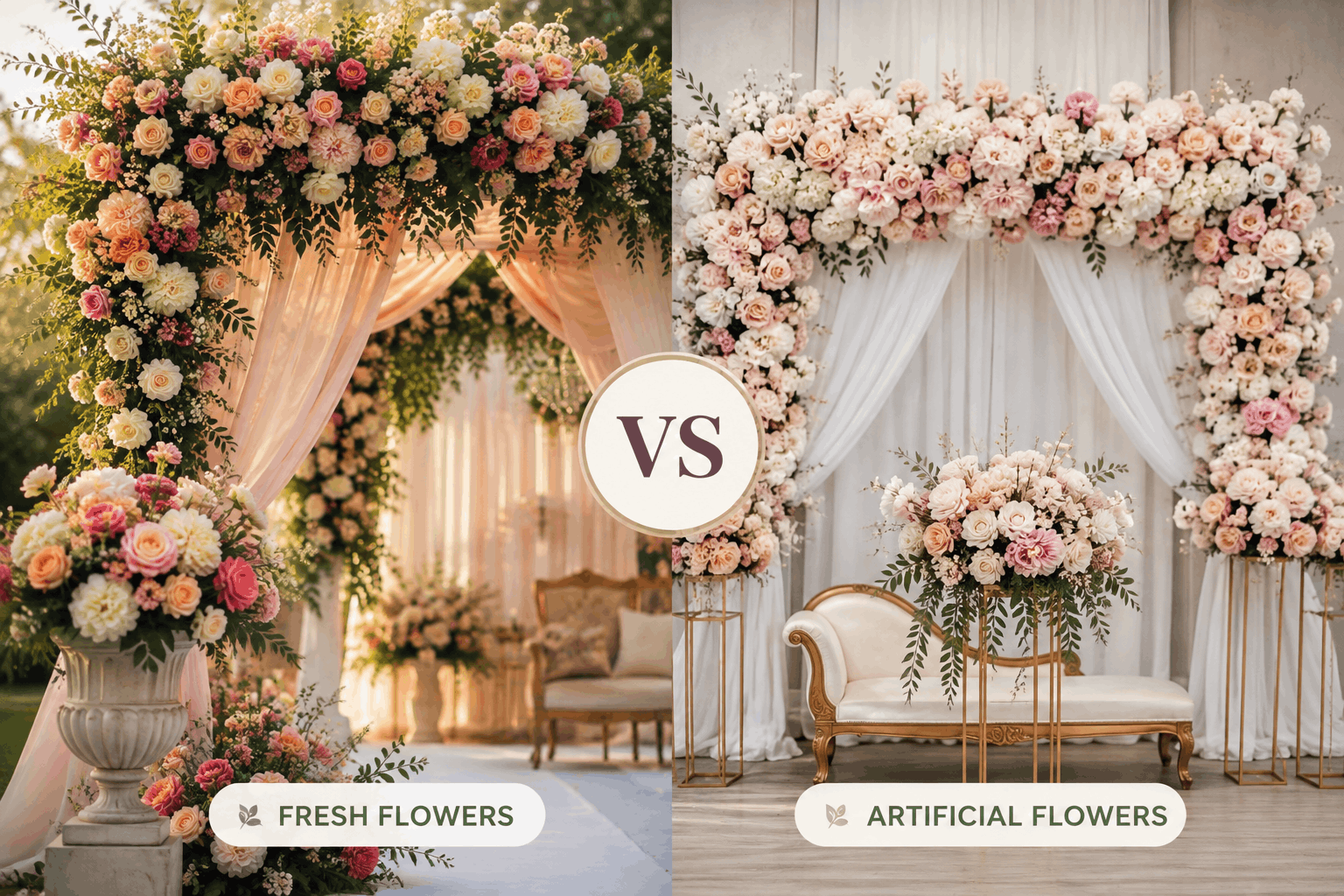
Each couple planning a wedding in Pokhara or Kathmandu faces this question. Do you go with fresh flowers or artificial flowers? It may seem like a minor thing, but it will have implications for your budget, mandap design, set-up time, and even your photographs ten years later. This guide breaks down Fresh Flowers vs Artificial Flowers so you can decide with confidence.
Quick answer: Fresh flowers offer you natural fragrance, vibrant colours, and a classic touch. However, fresh flowers cost more than artificial flowers. Fresh flowers are delicate and easily perishable. Artificial flowers are cheaper when considered over a longer period of time. Artificial flowers can withstand harsh environmental conditions like heat, winds, and long hours of display. Artificial flowers are available in any colour and variety all year round. However, artificial flowers do not have any fragrance, and cheap ones may appear to be artificial. In Nepal, most wedding ceremonies now incorporate both types.
Want the full breakdown? Below you'll find real costs, durability facts, and tips from a Pokhara-based decoration team.
What Really Sets Fresh and Artificial Flowers Apart
Let's look past the basic pros and cons first. Here is where the real differences show up on your wedding day.
- Look and feel: Fresh flowers provide a natural texture and smell. Good-quality artificial flowers would seem as if they’re three feet away. After this distance, an attentive person could see the difference.
- Lifespan: Fresh flowers begin to wither within a few hours; higher temperatures accelerate this process. Artificial flowers retain their form and coloring for many years.
- Cost: Fresh flowers are paid for once. Artificial flowers might be more expensive initially. However, they are reusable forever.
- Sourcing: Availability of fresh flowers depends on the season. This is not the case for artificial flowers; you can use any flower throughout the year.
Now let's break down each option in full.
Pros and Cons of Fresh Flowers
They Look and Smell Real
Fresh flowers remain the primary option for most weddings. Marigold, rose, orchid, and jasmine give a natural radiance. None other than fabric and lights can replicate this natural beauty. The fragrance is another thing which makes it unique. Many people remember the fragrance of fresh marigold garlands even after years of their wedding.
They Carry Cultural Weight
Fresh flowers play an important role in wedding rituals in Nepal. Garlands made of marigolds are put to use in the jaimala ritual. These flowers are used at the mandap. These flowers are used for the blessing by elders.
They Cost More
Fresh flowers tend to be expensive. This applies to large-scale construction such as flower walls or mandaps. The expenses incurred in this process include:
- Time and expertise of the florist
- Flower arrangements on the same day with refrigeration
- Loss of flowers during transportation or due to the heat
- Imported or exotic flowers such as peonies, which are more expensive
Nepali flowers are cheaper. Marigold, roses, and chrysanthemums thrive well in Nepal. Importing flowers makes them expensive due to handling and transportation.
They Need Careful Timing
Fresh flowers require same-day preparation. They require water. They require shade. They require coolness until the event begins. This creates a challenge for your decoration team. One late delivery or warm afternoon can destroy your mandap.
They Depend on the Season
The marriage season takes place during the Nepali months of Mangsir, Magh, and Falgun. The cost and availability of marigold during Mangsir, just after the harvest period, is much lower than during any other month. In Pokhara, the lake side location makes the fresh flowers hard to keep alive.
Pros and Cons of Artificial Flowers
They Survive Almost Anything
This is where artificial flowers score better. They do not fade away even with high temperatures. They last through long outdoor events. They maintain their form from setup to disassembly and reuse at another event. This is especially true for destination weddings with long breaks before the ceremony.
Any Flower, Any Color, Any Season
If you would like to have peonies for your winter wedding but they are not available because they do not grow during this time of year, you can choose artificial flowers for the solution. Season limitations do not matter when it comes to artificial flowers. Neither does location.
They Save Money Over Time
One set of artificial flowers may cost more than one set of real flowers. However, you can recycle artificial components. The floral arrangement group can use the same flower wall or arch for several weddings. That is why large, reusable structures have artificial flowers.
They Need Little Care
Artificial flowers require neither water nor cold storage. There is no same-day rush. They may be assembled and tested weeks before the actual wedding. This will ease the tension on that day and prevent any wastage from wilting stems.
The Realism Question
Silk or latex flowers that are good quality can mimic the look of real flowers very well, either in photographs or when viewed at normal distances. Poor quality ones may look rigid and overly glossy when photographed under bright lighting. The success depends more on the quality of the materials used and the team installing them.
No Scent, No Organic Feel
However, artificial flowers cannot replicate the fragrance. For many families in Nepal, the fragrance of marigold and jasmine flowers adds to the authenticity of the marriage ceremony. Artificial flowers also lack the significance that fresh flowers carry due to traditional requirements.
Fresh vs Artificial Flowers: Quick Comparison

What to Use for Each Part of a Nepali Wedding
Most decorators, including our team at Gadhimai Decoration, don't pick just one type of flower for the whole wedding. We choose flower by flower, spot by spot.
- Mandap: Fresh marigold, rose, and jasmine should be used for this area because their significance lies in the rituals involved in the ceremony. For a low budget, use an artificial base decorated with fresh flowers on top of it.
- Bouquets: Go for natural flowers. They are close. They can be seen in all pictures. Couples want them to look real.
- Stage and entrance gate: Artificial flowers suit them better. These structures have to be erected much earlier than the event date. The artificial flowers will withstand till the end of the evening.
- Photo booths: They are there for as long as guests need to take photos in them. Fake flowers, provided they match the color and texture, will last much longer than real ones.
- Cake decor: You could use small artificial flowers complementing your theme in this case, without any problems like contamination. They always look great for cake-cutting shots at any time.
- Aisle decor: You could use small artificial flowers complementing your theme in this case, without any problems like contamination. They always look great for cake-cutting shots at any time.
Cost Guide for Pokhara and Kathmandu Weddings
Cost is dependent upon size, the type of flower, and the design. Still, here's a general pattern for Nepal:
- Local flowers such as marigold, rose, and chrysanthemum are the cheapest. The price reduces further during Mangsir due to the abundance of stock.
- Foreign flowers such as peony or orchids are very expensive since their transportation requires great care and quick delivery.
- Good artificial flowers may cost more per piece at first. But you save money over time. You can reuse them, rent them out, or use them at another event.
- Large builds like flower walls and wide entrance arches usually cost less in artificial materials. You don't need to rebuild them with fresh stems every time.
Here's a simple rule: if guests touch it, wear it, or use it in a ritual, go fresh. If it stands overnight or sits in the sun for hours, go artificial.
Tips From Gadhimai Decoration
We have arranged weddings at Pokhara, Kathmandu, and the surrounding areas. Some of the basic tips that we advise the couple while deciding between fresh and artificial flowers are:
- Choose flowers based on where they'll be used
Consider the venue, climate, and duration of the flowers. Fresh flowers should be selected if they are needed for a personal area, whereas artificial flowers suit large areas.
- Consider your wedding month
Flowers prices and availability may vary based on the season. You can choose fresh flowers in the cool seasons, but artificial flowers are easy to use in hot and outdoor wedding seasons.
- Check samples before booking.
Artificial flowers can vary greatly in quality. Ask your decorator to show you the actual flowers and colors before finalizing your decoration.
- Use fresh flowers where they matter most
You do not have to use fresh flowers all the time. They should be used only at the mandap, for garlands and bouquets, while artificial ones may work well on large backgrounds and structures.
- Talk to your decorator early.
Discuss your flowers' options before the wedding day gets close, because that will provide you with more choices.
Final Verdict
There is no one perfect option when it comes to Fresh Flowers vs Artificial Flowers. This depends on the kind of venue, wedding season, budget, and preference of style.
Fresh flowers have natural beauty and fragrance, but artificial flowers are more durable and easier to handle. In most cases, the use of both types can make your arrangements beautiful without stretching your budget.
Planning your wedding decoration in Pokhara or Kathmandu? Gadhimai Decoration can help you choose the right flowers and create your mandap, stage, entrance, and other floral setups based on your venue and budget.
Get a free quote or browse our gallery to see how we've handled Fresh Flowers vs Artificial Flowers for real weddings.
Frequently Asked Questions
Is it better to use fresh or artificial flowers for a wedding?
It depends on the part of the wedding. Use fresh flowers for bouquets, garlands, and mandap rituals. Use artificial flowers for entrance gates, stage backdrops, and photo walls that need to last all night.
Are artificial flowers cheaper than fresh flowers?
Not always. Local, in-season flowers like marigold can cost less than high-end artificial flowers for a small setup. Artificial flowers save more money on large builds or when reused across events.
Do artificial flowers look real in photos?
Good silk or latex flowers photograph well. Most guests can't tell the difference in photos. Cheap artificial flowers can look stiff or too shiny under bright event lights.
Can I mix fresh and artificial flowers at my wedding?
Yes. Most decorators suggest this. A common mix is fresh flowers for the mandap and bouquets, with artificial flowers for the stage, gate, and photo wall.
Which flowers work best for a Pokhara wedding?
Marigold, rose, and chrysanthemum work best. They grow locally. They cost less. They're easy to find during peak wedding months like Mangsir and Falgun.
How early should I decide on fresh vs artificial flowers?
Talk to your decorator as soon as you lock in your date and venue. Flower prices and supply shift with the season. Artificial flower samples also take time to source and approve.
Do artificial flowers fade or wear out?
Good artificial flowers hold their color and shape for years if stored well and kept out of direct sun for long periods. Cheap materials fade faster with repeated outdoor use.
Gadhimai Decoration
Editorial
"Passionate about capturing the essence of cultural heritage through modern storytelling. Editor at Gadhimai."