
Best Wedding Season in Nepal: Auspicious Months for Your Big Day
Discover the best wedding season in Nepal, from auspicious Mangsir and Falgun dates to weather, venue planning, and seasonal wedding decoration tips.
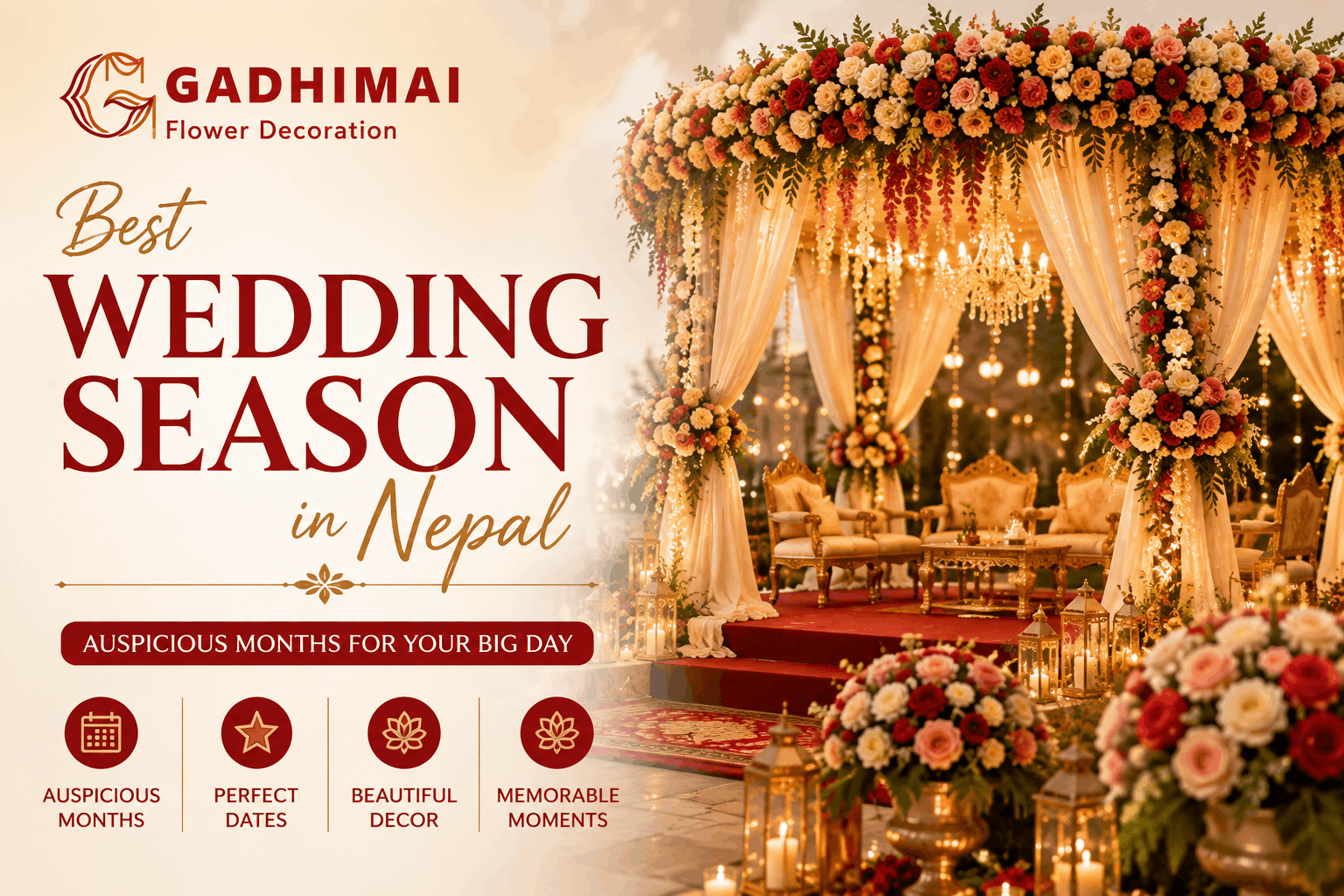
Choosing a wedding date in Nepal is not just about a free weekend. In Nepal, marriage is one of the sixteen sacred samskaras. It is a rite of passage. The date matters. It requires the blessing of the stars, the sun, and the family priest. That is why couples in Kathmandu, Pokhara, and elsewhere spend months searching for a saait, or wedding muhurat, before choosing the best wedding venue decorator.
This guide discusses the best wedding season in Nepal. It includes an explanation of the lucky months. It also sheds light on why some months are skipped. Finally, it illustrates the impact of each season on wedding decoration.
Why Wedding Dates Matter So Much in Nepal?
A wedding, according to Hindu beliefs, is a sacred union. It joins two souls. It is blessed by the sun, the moon, the stars and the four directions. Fire is also a significant factor. It brings offerings to the gods. So the date of the wedding should be set when the planets are well aligned for the couple.
This is where Uttarayan and Dakshinayan join in. These are the two halves of the traditional calendar. They track the sun's movements to the north and south. Uttarayan is the time when most of the marriages take place in Nepal. This time spans from Magh till Asaar, which is from mid-January till mid-July. Hindus believe it is auspicious for marriage.
Astrologers trim it down even more. They examine the Nakshatra, the Yoga and the Sun and Moon positions. This is necessary to get the exact marriage muhurat, that is, the auspicious date and time of marriage.
This is why "best wedding season" in Nepal means a handful of clustered dates. It's not one open month. There are approximately 40–45 auspicious marriage dates in a normal year. They occur irregularly in the course of a few months. This is why venues, decorators, and tent houses book up fast when those dates roll around.
The Nepali Wedding Calendar: Best Months to Marry
Mangsir (Mid-November to Mid-December) — Peak Wedding Season
Mangsir is the most loved wedding month in Nepal. It comes right after Dashain and Tihar. Families are already united. Homes have new furnishings. The harvest is done. A wedding is a perfect fit.
The weather also plays a part. The monsoon has passed. The days are sunny and cool. Evenings remain cool, but comfortable for outdoor events. This month is a gift for decoration. It's easy and inexpensive to obtain marigolds and other flowers. For outdoor mandap installations, no rain cover is required. Clear night skies adorned with string lights and LED lights.
Due to the high demand for a Mangsir date, it fills up early. Reserve your date and your decorator 3-4 months in advance if you prefer a Mangsir wedding.
Magh (Mid-January to Mid-February)
Magh is the beginning of the winter wedding season. It starts right after Maghe Sankranti. It's cold, especially in the hills and the Kathmandu Valley. Morning fog occurs in the Terai area. Nevertheless, it continues to be popular. It comes in the initial part of Uttarayan and provides numerous auspicious dates.
For decoration, Magh weddings often move indoors or under cover. Lighting is the most important factor here. Consider the use of candle clusters, heated tent setups, and amber fairy lights. They cut out the cold and help to keep the atmosphere warm.
Falgun (Mid-February to Mid-March) — Most Auspicious Dates
The month of Falgun often has the most marriage dates in the muhurat. Some years bring a dozen or more. It marks the end of winter and the beginning of Holi, the festival of colors. This adds a celebratory atmosphere.
By Falgun, the worst cold has passed. Couples like it because it has more open dates than Magh, without the deep chill. This month is ideal for creating a combination of indoor and outdoor decorations. Use a covered mandap with open seating areas. Plant additional spring blooms together with the normal marigold.
Baisakh (Mid-April to Mid-May)
Baisakh marks the Nepali New Year. A good option for couples who couldn't get married this winter season or couples who prefer to get married this spring. Days turn warmer. Flowers bloom fuller. Outdoor facilities are back in action. But decorators need a rain plan, since pre-monsoon showers can pop up without warning.
Months to Avoid
Not every month works for a wedding. Here's what to skip:
- Chaitra (Mid-March to Mid-April): An exception within Uttarayan. Not recommended.
- Shrawan (Mid-July to Mid-August): Daksinayana begins. Considered to be an inauspicious month for marriage.
- Kartik (Mid-October to Mid-November): Long-held belief says it brings hardship to married life.
- Chaturmas and Sorha Shraddha: This duration spans from mid-July to early autumn. Pitru Paksha is included in this period, which is dedicated to paying respects to one’s deceased elders. Marriage muhurat does not occur during this period; marriage generally stops until Tulsi Vivah in November.
You should always cross-check these periods against the current year's panchang with your priest, as Bikram Sambat may vary by a small amount every year, with some years having an additional month called Adhik Mas.
Nepali Wedding Season at a Glance

Wedding dates and auspicious periods can vary each year, and leap months may shift the Gregorian date ranges. Always check the year's actual panchang before finalizing your wedding date.
Use this table as a quick guide, but confirm the exact date with your priest. Then discuss the date, venue, and decoration plans with your decorator. This helps you choose a wedding date that works with your traditions, budget, weather, and desired wedding style.
Pokhara vs. Kathmandu: Does Location Change the Best Season?
The auspicious marriage dates are usually similar for Nepal. Nevertheless, the actual muhurat/Lagna can vary depending on where you live. In case your destination for the marriage is somewhere like Kathmandu, Pokhara, or other cities, please verify the exact time from a local priest.
The venue can also affect the ambiance of the wedding season. In particular, Pokhara is beautiful at the end of the rainy season, during Mangsir and Falgun, when the air is mild and the sky clear, offering ideal settings for ceremonies at the lakes, outdoor decorations, and pictures of the mountains.
Kathmandu Valley offers more indoor halls, hotels, and covered venues throughout the year, so weather may have less impact on your plans. Mangsir's dry and mild weather, however, can be a great option if an outdoor courtyard wedding is desired.
Are you looking to plan your destination wedding in Pokhara? If you're looking to enjoy clear mountain views and outdoor festivities, think of Mangsir or Falgun. These conditions also make it easier to enjoy open-air mandaps, fairy light canopies, floral arches, and other outdoor decorations without the need for heavy weather protection.
How Wedding Season Shapes Your Decoration Choices
Your wedding month is not just an astrology choice. It shapes your decoration too the look, the cost, and how far ahead you need to plan.
- Winter weddings (Magh, Falgun): Go for warm lighting, layered fabrics, covered mandap or heated mandap. Marigold is the most affordable and readily available flower. An LED light fixture can make even the cold winter evenings warm and entertaining.
- Post-monsoon weddings (Mangsir): This is high season for decorating in all respects. The skies remain clear. The weather remains mild. Flowers are abundant. However, the tent makers and florists become occupied quickly, and thus, costs tend to be relatively high. Garden-style and pastel decor themes. Just keep a rain plan ready for outdoor setups.
- Off-season months: Very few marriages take place during the months of Shrawan, Kartik, and Chaturmas. This is to your advantage if your family can be flexible with their schedule. The decorators and venues are all available, and you will get a good bargain provided you factor in the weather conditions.
2027 Wedding Decoration Trends Worth Knowing
If your muhurat is scheduled to fall during one of the busy periods, here are some trends to consider:
- Mixed traditional-modern mandap design: Combine traditional marigold garlands and Panche Baja ceremonies with modern elements such as geometric backgrounds, pastel curtains, and LED signs.
- Sustainable, reusable decor: Instead of purchasing decorations, go to rent arches, lighting sets, and props. This will be both cost-effective and environmentally friendly.
- Photo-first design: Create a photo booth or backdrop wall right at the outset. After all, so much is going to be shared on social media in any case.
- Layered lighting: Combine fairy lights, spotlight, and LED candlelight. This creates a sense of depth. An overhead light makes everything look flat.
A wedding decorator who knows these trends and knows which venues book up for your muhurat can save you weeks of back and forth during a busy planning season.
Tips for Planning Your Wedding Around the Best Season
- Book your date early: Only a few auspicious dates exist each year. Mangsir and Falgun fill up fastest. Top tent house teams, florists, and decorators in Pokhara and Kathmandu get booked months out.
- Match your decor to the season: A Mangsir wedding can go big on open-air mandap decor and fresh flowers. A Magh wedding needs warm lighting and cover from the cold.
- Look at off-peak auspicious dates: Not every muhurat falls on a weekend. A Tuesday date in the same busy month can bring the same blessing with far less competition for vendors.
- Plan for weather: Baisakh and Falgun beginning dates might be rainy days. Have an alternate plan ready.
- Talk to your decorator before you set the date: An experienced wedding decorator is aware of how busy each venue is with respect to a particular muhurat. They can guide you on a mandap style, lighting arrangement and flowers according to the season.
- Set your budget before the venue search: After choosing the wedding season, consult your decorator for the initial budget range to estimate the costs of heating and covering. It will help you compare the venues equally because a lower-priced place that requires additional winter decoration could be more expensive than a somewhat more costly one.
- Loop in your family early: For many Nepalese weddings, the date and decoration design are chosen by both families together. By discussing everything in one call, you could save up to several weeks in comparison with communicating through intermediaries.
Common Mistakes Couples Make When Picking a Wedding Season
Even with a clear calendar, couples often run into the same few problems. Here's what to watch for:
- Booking the venue before checking the decorator's availability: A stunning hall means little if your favourite decor team is already booked for that exact muhurat. Check both at the same time, not one after the other.
- Ignoring the weather until the last month: A Baisakh date can look perfect on paper, then bring surprise rain a week out. Ask your decorator about their backup plan from day one, not after the forecast turns bad.
- Underestimating how fast Mangsir and Falgun fill up: Families often assume a few weeks of lead time is enough. In peak season, that's rarely true. The best teams get locked in months ahead.
- Skipping the design conversation until close to the date: Waiting too long to decide on a mandap style, color palette, or lighting plan can limit your options once flowers and materials for that season sell out.
Avoiding these mistakes usually comes down to one thing: starting the decoration conversation as soon as you lock in your muhurat, not after.
Final Thoughts
There's no single answer to the best wedding season in Nepal. It comes down to astrology, weather, and how you plan. Mangsir wins on weather and mood. Falgun wins on the number of open dates. Magh and Baisakh each bring their own strengths. Whatever month your muhurat lands in, the right decoration team can shape your mandap, lighting, and flowers around that season.
Locking in your wedding date? Want decoration built for your season, not squeezed into it? Gadhimai Decoration offers wedding and event decoration across Pokhara and beyond. That includes mandap setup, floral styling, and full tent house packages. Reach out early, especially for a Mangsir or Falgun date. Those book up fast.
Frequently Asked Questions
Which is the best month for a wedding in Nepal?
Mangsir, from mid-November to mid-December, is the most popular and auspicious choice. It follows Dashain and Tihar and brings good weather for both indoor and outdoor decoration.
How many auspicious wedding dates fall in a year in Nepal?
Most years hold about 40 to 45 marriage muhurat dates. They spread unevenly. Falgun alone can hold a dozen or more, while other months have very few.
Which months should couples avoid for weddings in Nepal?
Shrawan, Kartik, and Chaitra are usually skipped. So is the Chaturmas and Sorha Shraddha period, which runs from around mid-July through early autumn.
How far ahead should I book my wedding decoration?
For peak months like Mangsir and Falgun, book your decorator 3 to 4 months ahead. For quieter auspicious dates, 6 to 8 weeks often works fine.
Does the season change wedding decoration cost?
Yes. Peak dates, especially in Mangsir, bring high demand for florists and tent houses. This can push prices up and shrink availability. Quiet auspicious dates in slower months often come with better deals.
Can I still get married during an off-season month?
Some families do choose a quieter month for personal reasons, like work schedules or guest travel. If your priest confirms a valid date outside peak season, you can still plan a full wedding. You may even save money, since vendors have more open slots and more time to focus on your event.
What should I ask my decorator before booking a date?
Ask if they have an open slot for your exact muhurat date. Ask how weather in that month affects setup, teardown, and any backup plan. And ask how early they need final headcounts and design choices locked in, since peak months often come with tighter prep windows.
Gadhimai Decoration
Editorial
"Passionate about capturing the essence of cultural heritage through modern storytelling. Editor at Gadhimai."